

We're calling for a national focus on transport equity as eight years of government data shows a persistent mobility gap.
Disabled people continue to make significantly fewer journeys than non-disabled people. New analysis of the Department for Transport's annual National Travel Survey (NTS) reveals a persistent mobility gap that has remained largely unchanged for more than eight years.
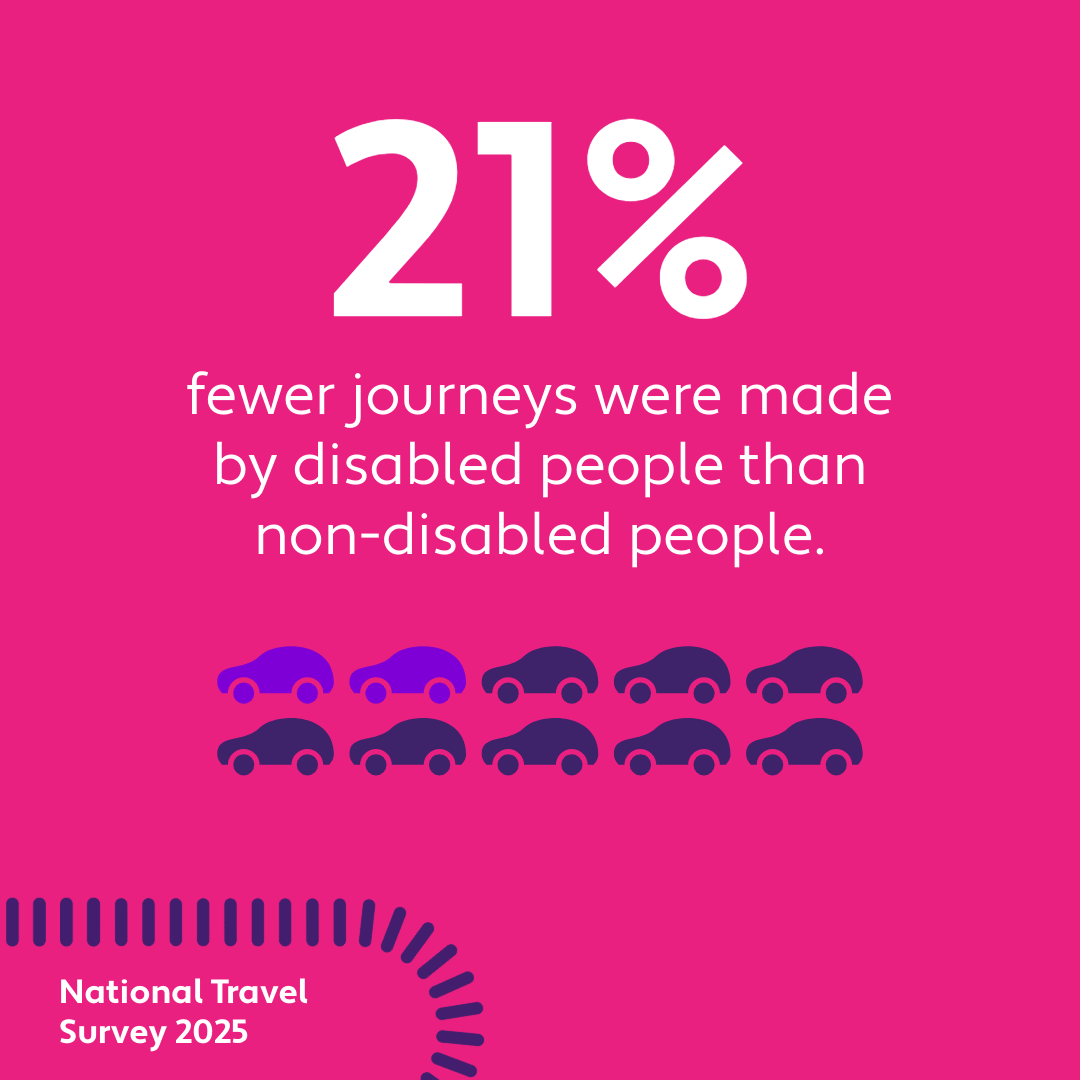
The latest NTS shows disabled adults in England made 21% fewer journeys than non-disabled people in 2025, (an average of 713 trips per person in 2025, compared with 901 for non-disabled adults) - a gap of 21%, with the gap rising to almost a third among those aged 60 and over. Analysis of successive National Travel Surveys shows this gap has consistently remained between 20% and 30% since disability reporting began in its current form in 2018.
We're highlighting what these statistics really represent: not simply fewer journeys, but fewer opportunities to work, learn, access healthcare, spend time with family and participate fully in society.
"This isn't a short-term issue; it's a persistent inequality"
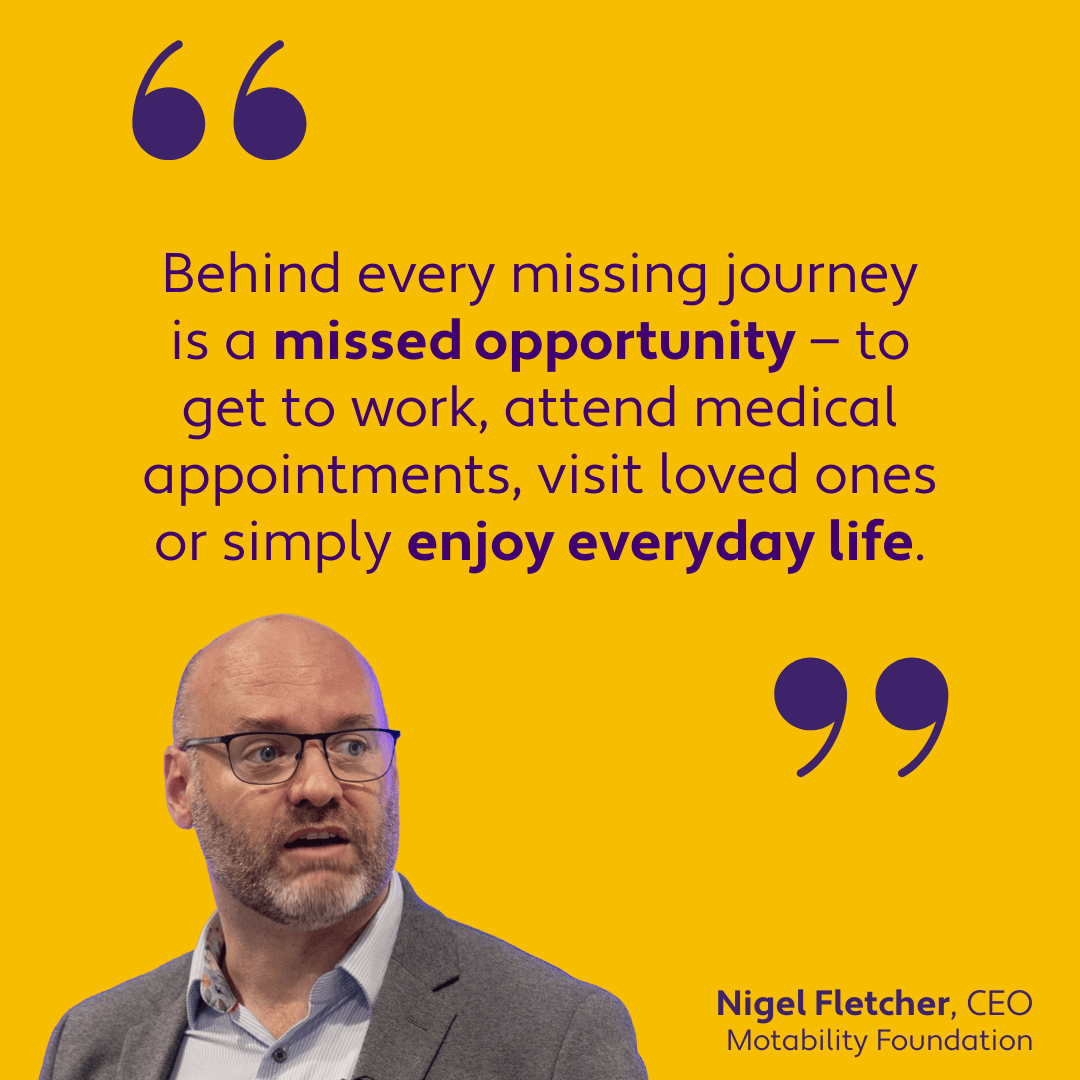
Nigel Fletcher, CEO of the Motability Foundation, said:
"Every journey tells a story. Behind every missing journey is a missed opportunity - to get to work, attend a hospital appointment, visit loved ones or simply enjoy everyday life.
"The National Travel Survey shows that disabled people continue to make fewer journeys than non-disabled people. What's most concerning is that this gap has barely changed for years. This isn't a short-term issue; it's a persistent inequality that affects millions of people across the UK.
"Transport is about far more than getting from A to B. It is the key that unlocks independence, employment, education and social connection. If we want a fairer and more inclusive society, we must build a transport system that enables disabled people to make the journeys they choose."
The findings
The survey highlights the scale of the challenge facing disabled people:
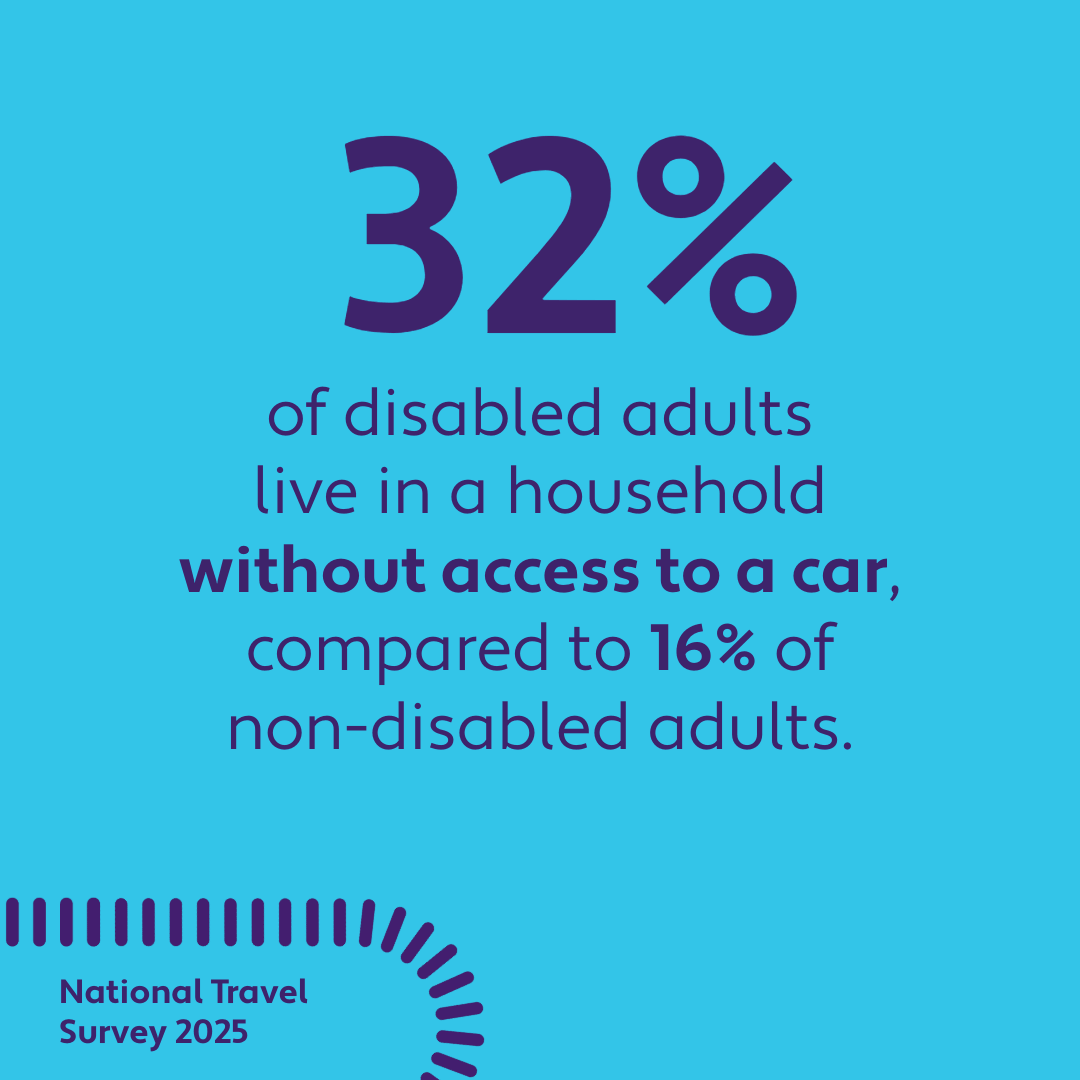
Disabled people are twice as likely to live in households without access to a car. 32% of disabled adults lived in a household without access to a car, compared with 16% of non-disabled adults.
The average number of trips made by disabled adults (909) in full-time work was similar to that of non-disabled adults in full-time work (893). However, there is a sharp divide behind this, as explored in our secondary analysis of NTS 2024. After adjusting for variables like income, age, and location, disabled commuters had 96% higher odds of experiencing difficulties travelling to work by public transport than non-disabled people.
The travel gap persists across income levels – but is greatest among lower-income disabled people. Disabled people in the lowest-income households made 21% fewer journeys than their non-disabled peers, rising to 25% in the second-lowest income group.
Transport inequality is experienced differently by different groups of disabled people. Those reporting speech or vision impairments made the fewest journeys among the impairment groups reported: 586 and 610 trips respectively.
These figures reflect the lived experiences of many disabled people, who continue to face inaccessible public transport, unreliable assistance, poor street design, limited accessible travel options and digital barriers when planning journeys. And those issues are made worse by other factors such as age, income, living in a rural area, or having multiple conditions.
Together, the evidence demonstrates how transport barriers can affect employment, health, independence and quality of life.
"They felt I was undeserving"
Charlie is 45, lives in Essex and has Ehlers-Danlos Syndrome and Postural Orthostatic Tachycardia Syndrome. They said.
“I used to live in London, but I rarely used public transport, despite it being plentiful. It was too difficult if I didn’t have someone with me. It would exhaust me before I reached my destination.
"There were many times people got angry with me if I asked to sit down. They felt I was undeserving. I had to take a walking stick everywhere, as a visual cue. Now I can drive, I don’t have to worry how I’ll get somewhere or feel like I’m being a burden on anyone.”
Looking forward
We're calling for renewed action to close the mobility gap through a long-term focus on transport equity - ensuring disabled people have accessible, affordable and reliable transport choices, whether travelling by car, bus, train, taxi or other modes.
Nigel Fletcher added:
"This isn't simply about transport policy. It's about opportunity. For too many disabled people, barriers to travel become barriers to employment, healthcare, education and community life.
"Closing the mobility gap will require long-term commitment, and close collaboration between government, transport operators and disabled people themselves, but the prize is enormous: a society where disability no longer determines your freedom to travel or your opportunity to participate."